Canada Revenue Agency Income Tax: audit Canada CRA Property Tax
by admin

leave a comment
Canada Revenu Agency Audit is Up This Year
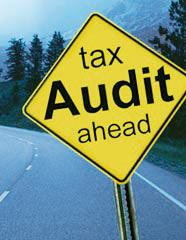
CRA Tax Audit
1. Education/Tuition fees expense.
2. Transfer of Tuition fees to spouse or parents.
3. Professional Membership dues
4. Donation Claim receipts
5. Medical expense claims
more »
2012 Offshore Voluntary Disclosure Initiative Announced by IRS

IRS OVDI Tax Collector
1. A USA Citizen
2. A Dual USA Citizen Living Abroad
3. A USA Resident
4. A USA Green Card Holder Living Abroad
United States Internal Revenue Service (IRS) has been aggressively pursuing US persons (including US citizens and green-card holders living abroad) who have failed to report foreign income on their US income-tax returns and/or failed to report foreign bank and investment accounts on a Foreign Bank Account Report (FBAR). A US Person, must file income tax return with IRS, regardless of their residency.
IRS implemented amnesty programs since 2009 for US citizens to come forward with their foreign income reporting. More than 30,000 people have voluntarily complied since 2009, at least 30 have been criminally indicted and the IRS has netted a total of $4.4 billion in unpaid taxes, interest and penalties.
The State Department estimates that more than 6 million citizens live overseas, excluding those in the military, yet the IRS receives only 1.6 million tax returns each year with foreign addresses. And just over 500,000 FBARs were filed in 2009.
On January 9, 2012 the IRS announced a third amnesty, formally known as the Offshore Voluntary Disclosure Program. It is substantially the same as the 2011 amnesty (aka 2011 OVDI), with some exceptions:
more »
How Would You Like To Pay Tax Like A USA Corporation

USA Corporation Tax Dodgers
These are companies listed on the top of Fortune 500 rankings and admired by professionals, investors and consumers all over the world. Their net profits are in billions of dollars, huge cash stashed in offshore accounts, and they are being subsidized by tax rebates from the USA Federal government.
The study of 280 fortune 500 companies identified,
• They have received about $223 billion in tax subsidies.
• Financial service companies (Banks) received the largest share of subsidy (17% or $37bn).
• Over the last three years 2008-2010, 50% of the tax subsidy was awarded to financial services, utilities, telecoms and oil, gas pipelines. more »
BC Province Canada Revenue Agency Tax Fraud: audit Scam
by admin
leave a comment
Donation Tax Shelter in Canada How it Works?
In Canada a tax payer can claim 75% of his income as donation and get a Tax Credit of 43% (combined Federal and BC Province) as a tax payable reduction or cash refund.
Donation is a very attractive Tax Shelter for people in higher income tax bracket.
Donations to Canadian registered charities and other qualified donees approved by CRA can only be claimed as charitable donations.
At the end of each calendar year many tax shelter advocate give attractive and compelling presentation to tax payers to donate money to their tax shelter and either reduce tax or get a big refund.
more »
Illegal Tax Saving Schemes Promoted by Charity Promoters
At the end of the year with Holidays, Christmas and Gift of Giving makes us all charitable and there are these Charity Promoters, who take advantage of your Good Will by tying your charity/donation contribution with tax savings.
Donations in excess of $200 each year will save you 44% in taxes. That is the amount you get as Tax Credit to reduce your overall tax bill.
This is where the Charity Promoters take advantage of you. They promise to give you a charitable contribution receipt many times more than the actual cash contribution. Even with your good will to help the needy, you fall hostage to your greed and give in to their shady scheme. These charity promoters offer you a receipt in the range of $4,000 to $5,000 for every $1,000 cash donation. Their reason for offering the additional money in the donation receipt is that your $1,000 will have such a great effect on the needy, that it could be easily valued at $5,000, so they can issue a $5,000 donation receipt for you.
The problem is this kind over valuation of Cash donation is in violation of Canada Revenue Agency regulation.
If you are given a donation receipt in excess of your Cash donation by a charity promoter, be sure that your tax return will be audited and your donation contribution for tax savings purposes will be disallowed
Donation to your favourite charity is a great way to help the needy also reduce your taxes. There are many other legitimate ways for tax savings other than inflating your actual cash donation.
CRA is actively prosecuting these kinds of Charity promoters.